
Port Operators Face Growing Financial Exposure from Cargo Flow Bottlenecks
Traditional performance metrics like gross volume and vessel calls fail to capture the financial risks driven by cargo velocity and terminal flow.
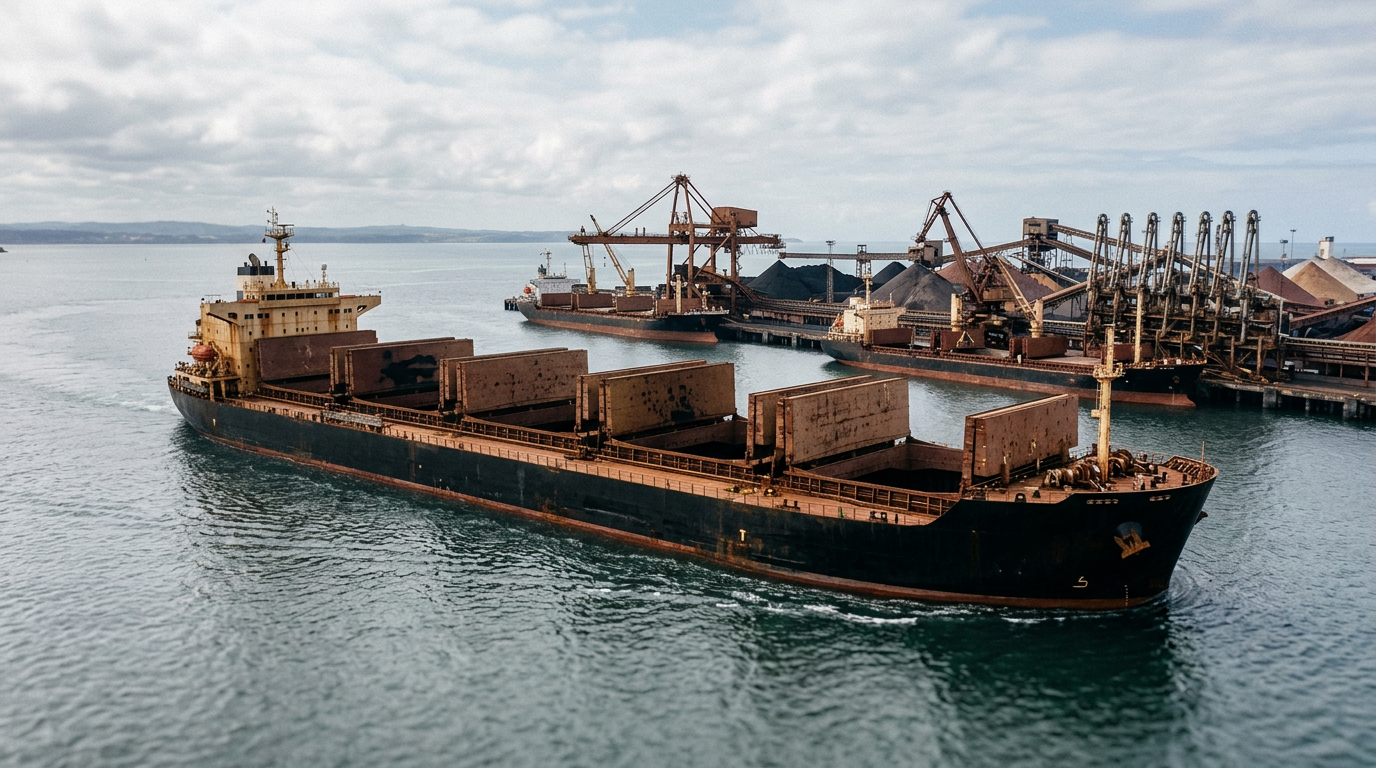
Port performance evaluation has long centered on standard operational indicators such as gross cargo volumes, total vessel arrivals, crane productivity rates, and overall infrastructure capacity. Marine terminals and port authorities have historically relied on these throughput metrics to gauge market share and operational health.
While these traditional benchmarks offer insight into physical terminal scale and baseline asset utilization, industry analysis indicates they do not fully account for commercial exposure. Evaluating a facility purely on volume and physical asset dimensions risks obscuring critical operational variables that govern balance-sheet performance.
The velocity and continuity of cargo flow through terminal gates, yards, and quayside transfers represent the primary driver of financial stability. Bottlenecks, extended dwell times, and supply chain friction directly affect cost structures and revenue generation across terminal facilities.
As global supply chains continue to navigate operational volatility, terminal management strategies are increasingly focusing on cargo flow efficiency alongside standard throughput tallies to manage risk and protect long-term financial returns.
Source attribution
No external source recorded for this article.
This article is an original editorial summary. It does not reproduce the source text. See our AI & content policy.
Related coverage
Beijing instructs top domestic producers to intensify exploration and upstream investment as geopolitical risks threaten overseas crude supply continuity.
3h ago
The British government is deliberating whether to proceed with the £8.7 billion Rosebank development west of Shetland as Brent crude remains above $100 per barrel.
3h ago
Disrupted flows from Russia and the Middle East alongside firm bunker demand have pushed high-sulphur fuel oil prices above feedstock crude in Asia.
2d ago
Growing geopolitical divisions and complex sanctions regimes are dictating the viability, financing, and insurance of global commodity transactions, according to law firm HFW.
3d ago
Media Coverage: Bloomberg covered Alkagesta’s agreement to acquire Energy Petrol on 22 October 2026. Acquisition details below are reproduced from Alkagesta’s announcement.
Markets4d ago
Regulation & Environment8d ago