
Alkagesta Sets Out Fertilizer Trading Discipline: Supplier Diligence, Cargo Inspection and Contract Precision
A new Market Insights paper from the Malta-based trading house details how fertilizer cargoes are de-risked long before they reach a vessel — with implications for dry bulk operators handling urea, UAN and phosphate parcels.
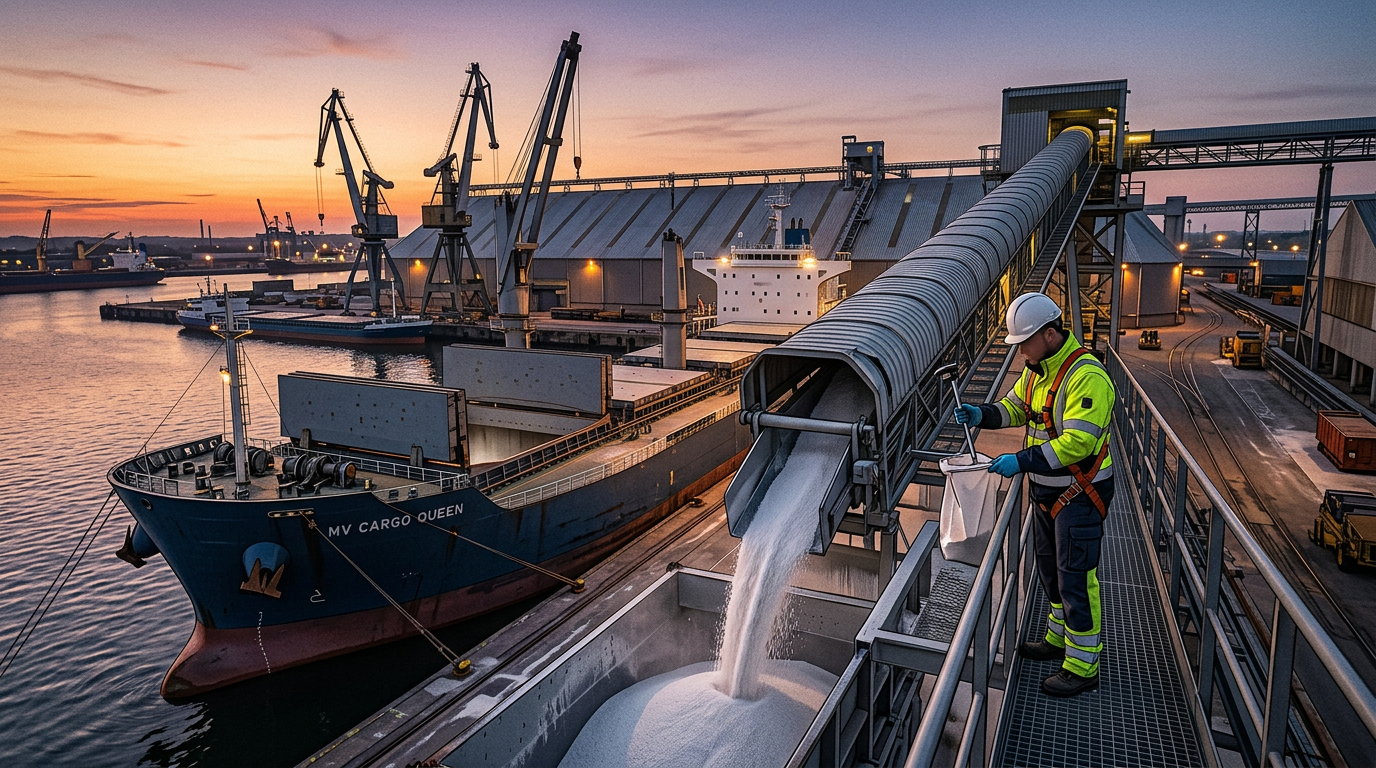
Fertilizer is one of the steadier earners in the minor bulk trades, and one of the least forgiving when a cargo fails inspection. In a Market Insights paper published on 22 September 2026, Alkagesta sets out how its fertilizer desk qualifies suppliers, verifies quality cargo by cargo, and locks the result into contract terms precise enough to survive a dispute. The paper is notable for the dry bulk audience because almost every control it describes has a direct consequence for laycans, load-port sampling and demurrage exposure.
Vusal Muradov, who leads the company's fertilizer desk, frames supplier assessment around three tests — reputation, reliability and product quality. In practice that means examining a producer's track record, its demonstrated production capability rather than its stated capacity, and its financial standing before meaningful volume is committed. The harder case is a new origin where no track record exists; there, the desk works to build a relationship on the ground rather than relying on documents and references alone. It is a position consistent with the approach described across the firm's wider trading operations, where origin risk is treated as a sourcing problem rather than a paperwork problem.
Policy has made that question more common. The European Council suspended customs duties on certain nitrogen fertilizers for a year in May 2026, explicitly to broaden the import base away from a small group of traditional suppliers. Diversification reads cleanly at policy level; at cargo level it means qualifying producers a buyer has never worked with, in ports and load regimes the chartering desk may not have tested. For owners and operators, that is the mechanism by which new fertilizer trade lanes appear — and the reason vetting standards at the trading end determine whether those lanes stay open.
Verification does not stop with the counterparty. Alkagesta describes confirming that delivered product matches contractual specification through independent inspection companies, laboratory analysis and sampling at the relevant stages of a shipment rather than a single check at loading. That discipline is measured against a shared industry framework: the IFA working group on harmonisation of fertilizer sampling and analysis standardises how the testing is performed, so an inspection on one cargo is comparable with an inspection on another. The firm's published risk management approach treats that independence as the control, not the formality.
The gap those checks are designed to close is documented. A 2026 EU market surveillance campaign tested 21 fertilizer products across six member states and found that two-thirds either omitted required information or misstated the quantity of nitrification or urease inhibitor they contained. On a Handysize parcel of inhibited urea, a deviation of that kind is not a labelling footnote — it is a rejected cargo, a vessel on demurrage and a discharge port with no home for the product.
Contract precision is where the rest of the work is defended. Price, quantity, quality, delivery terms, payment, inspection and load and discharge conditions all have to be defined clearly enough that both sides know how risk is allocated when conditions move mid-voyage. Alkagesta positions that drafting on top of the IFA trade contract template rather than apart from it, and alongside the trade finance structures that carry the cargo between payment and discharge. For shipowners, the practical read is that a well-drafted fertilizer contract is what keeps laytime disputes from becoming ownership disputes.
The operational tail matters just as much. Fertilizer moves through terminals with variable loading gear, moisture sensitivity and segregation requirements, which is why the desk's work sits so close to the company's shipping and logistics function. Contingency — an alternative discharge berth, an alternative inspector, an alternative barge leg — is the difference between a delayed cargo and a failed one, and the paper is explicit that those alternatives are arranged before they are needed rather than during the disruption.
Muradov's summary is that the best risk management is preparation: clear contracts, reliable counterparties, independent inspections and contingency plans established in advance. That posture is consistent with the governance material the company publishes elsewhere, including its compliance screening standards, its code of conduct, its ESG framework and its core values, as well as the strategy described in its business model and in the 2025 annual report. Read together with its transparency disclosures and its company history, the fertilizer paper is less a market call than a statement of method.
The full analysis is published on Alkagesta Market Insights, alongside the desk's account of the Argus Fertilizer conference in Istanbul, its overview of what the company does, the leadership and governance team behind it, and video interviews on Alkagesta TV.
Source attribution
No external source recorded for this article.
This article is an original editorial summary. It does not reproduce the source text. See our AI & content policy.
Related coverage
Regulation & Environment46m ago
A fresh market overview from Alkagesta delivers vital clarity on European inland transport conditions and Persian Gulf supply balances.
8d ago
YILPORT Iberia and port authorities have unveiled a €100 million capital project to modernize and expand container handling facilities at the Port of Leixões.
11d ago
Malta-based trading house Alkagesta has received the EcoVadis Committed Badge, an evidence-based sustainability rating covering environment, labour, ethics and procurement across its global commodity operations.
Markets21d ago· Elena Marchetti
CFO Orkhan Zeynalli and board member Pierre Gay represented Alkagesta at Global Trade Review's flagship Geneva forum, where corridor disruption, liquidity and compliance dominated the agenda.
Markets26d ago· Elena Marchetti
Anthony Guida, biofuels desk lead in Geneva, describes how a first-year trading operation moved from market thesis to multi-year used cooking oil offtake agreements across Europe, Africa and Asia.
Markets28d ago· Elena Marchetti