
Climate Volatility Emerges as Structural Constraint on Maritime Supply Chains
Shifting environmental conditions are transitioning from intermittent voyage disruptions into permanent structural constraints for international trade routes.
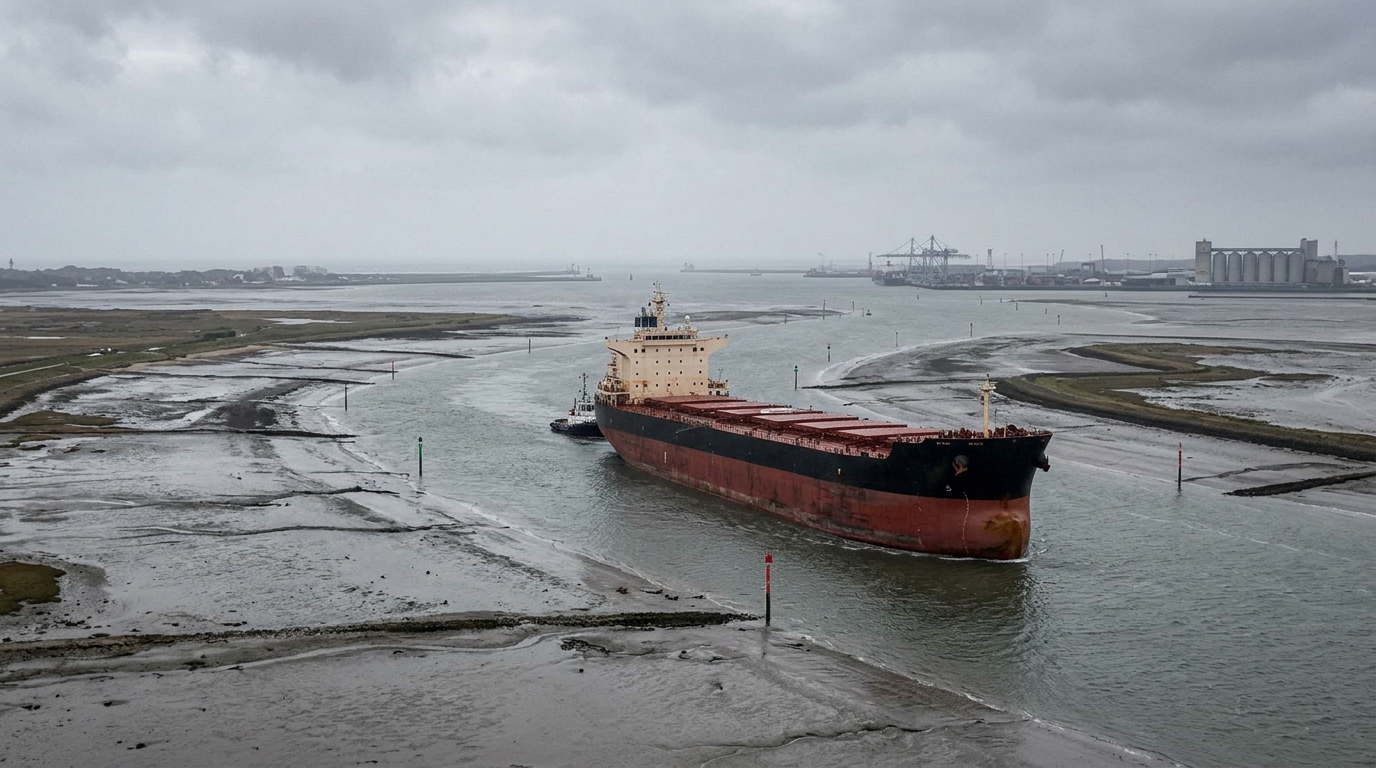
Global supply chain architecture is undergoing a fundamental shift as climatic conditions increasingly dictate commercial trade flows. Extreme weather patterns and changing environmental baselines are no longer functioning merely as isolated, short-term disruptions that commercial operators can routinely work around, but are instead solidifying into structural constraints across international trade corridors.
Historically, the maritime transportation sector and associated logistics networks approached adverse weather as localized, transient occurrences. Fleets and charterers mitigated delays through standard operational measures, including speed adjustments, dynamic weather routing, and tactical scheduling, assuming conditions would swiftly revert to seasonal norms.
However, persistent shifts in climatic conditions are challenging these conventional risk management assumptions. The growing unpredictability and severity of weather events are exposing long-overlooked fragilities within the global logistics framework, demonstrating that existing maritime infrastructure and trade routes were built on models of environmental stability that are becoming increasingly outdated.
As these atmospheric and hydrological shifts exert enduring pressure on strategic transport networks, maritime stakeholders are confronting the reality that weather-related bottlenecks are becoming a permanent fixture of commercial operations. Addressing these structural limitations will require supply chain operators to reassess long-term route reliability and operational resilience.
Source attribution
No external source recorded for this article.
This article is an original editorial summary. It does not reproduce the source text. See our AI & content policy.
Related coverage
Regulation & Environment2h ago
American industry relies almost entirely on foreign sourcing as domestic manufacturing covers less than one percent of annual rare earth magnet demand.
4h ago
Alkagesta had traded into Singapore since 2020, mostly through cargo arbitrage. In 2025, the company turned that flow into a permanent presence, establishing Alkagesta Asia Pte Ltd as a regional hub for physical marine fuels.
5d ago· Elena Marchetti
The Baltic Exchange's composite freight gauge fell 1.8% to hit its lowest level since late August, weighed down by sharper losses in the Capesize segment.
5d ago
Taiwanese dry bulk owner U-Ming Marine Transport has expanded its newbuilding pipeline with an order for four 64,000 dwt bulkers at New Dayang.
5d ago
Alkagesta has expanded its regional marine fuel capabilities by completing its first truck-to-vessel supply operation at the Romanian port of Constanța.
8d ago