
Inland Drought Emerging as Structural Supply Chain Risk, Warns TT Club
Low water levels on major inland waterways and canals are reshaping logistics flows and driving cargo shifts across supply chains.
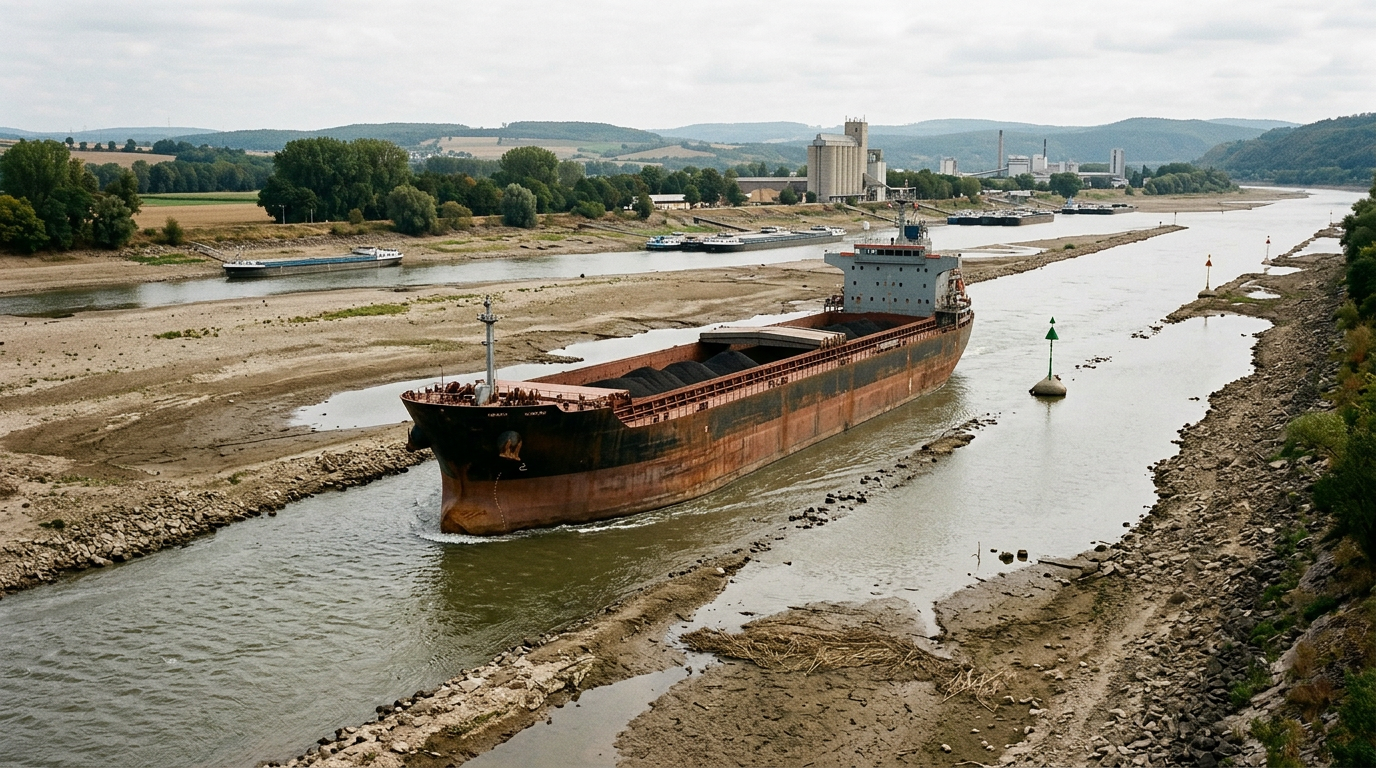
Persistent drought conditions and diminishing water depths along critical inland waterways are transitioning from seasonal interruptions into an enduring structural risk for global transport networks, according to mutual insurer TT Club.
Reduced draft capacity across major river systems and canal corridors is curtailing the volume of cargo that barges and inland vessels can safely carry. To navigate shallower waters without grounding, operators are frequently forced to lighten vessel loads, requiring more journeys or modal adjustments to move the same aggregate tonnage.
These waterway restrictions are triggering freight diversions toward overland transport alternatives, shifting significant volume onto already congested rail and road networks. The sudden reallocation of cargo across different transport modes increases operational friction and intensifies pressure throughout interconnected supply chain links.
As low-water conditions become more frequent and unpredictable, the transport insurer emphasizes that industry stakeholders must view these inland navigational challenges as a permanent logistics reality requiring long-term operational resilience rather than temporary contingency planning.
Source attribution
No external source recorded for this article.
This article is an original editorial summary. It does not reproduce the source text. See our AI & content policy.
Related coverage
Regulation & Environment2h ago
American industry relies almost entirely on foreign sourcing as domestic manufacturing covers less than one percent of annual rare earth magnet demand.
4h ago
Alkagesta had traded into Singapore since 2020, mostly through cargo arbitrage. In 2025, the company turned that flow into a permanent presence, establishing Alkagesta Asia Pte Ltd as a regional hub for physical marine fuels.
5d ago· Elena Marchetti
The Baltic Exchange's composite freight gauge fell 1.8% to hit its lowest level since late August, weighed down by sharper losses in the Capesize segment.
5d ago
Taiwanese dry bulk owner U-Ming Marine Transport has expanded its newbuilding pipeline with an order for four 64,000 dwt bulkers at New Dayang.
5d ago
Alkagesta has expanded its regional marine fuel capabilities by completing its first truck-to-vessel supply operation at the Romanian port of Constanța.
8d ago