
Monitoring Vessel Traffic Anomalies to Uncover Maritime Security Risks
Irregularities in standard commercial vessel operations, from AIS blackouts to cargo discrepancies, serve as primary indicators for detecting covert maritime threats.
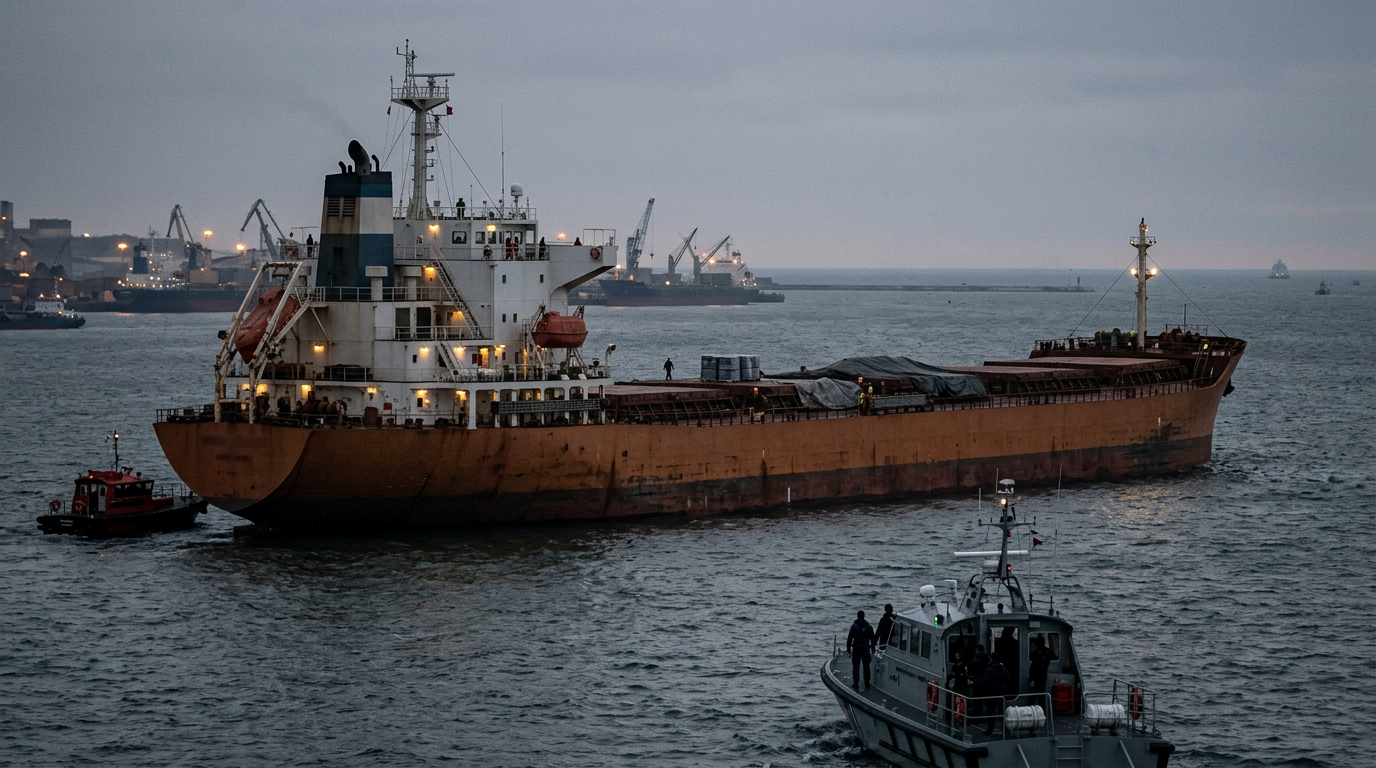
Commercial maritime shipping operates largely on established routes and predictable operational routines. However, security assessments indicate that illicit, criminal, and military activities frequently conceal themselves within ordinary commercial traffic by departing from known patterns.
Key behavioral deviations include unexplained interruptions in a vessel's Automatic Identification System (AIS) transmissions. When a ship's AIS track goes quiet, it obscures the vessel's movements and location from monitoring networks, representing a clear break from normal navigational protocols.
Other notable operational shifts involve vessels slowing down and holding position in waters situated outside designated shipping lanes. Such maneuvers deviate from standard commercial transit practices and often trigger scrutiny regarding the underlying purpose of the delay.
Inconsistencies also arise at the port interface, such as instances where cargo recorded upon arrival fails to match the manifest cleared at the previous port of departure. While an isolated deviation does not on its own define the exact nature of a threat, identifying these departures from standard routines remains a foundational element in maritime domain awareness.
Source attribution
No external source recorded for this article.
This article is an original editorial summary. It does not reproduce the source text. See our AI & content policy.
Related coverage
Regulation & Environment2h ago
American industry relies almost entirely on foreign sourcing as domestic manufacturing covers less than one percent of annual rare earth magnet demand.
4h ago
Alkagesta had traded into Singapore since 2020, mostly through cargo arbitrage. In 2025, the company turned that flow into a permanent presence, establishing Alkagesta Asia Pte Ltd as a regional hub for physical marine fuels.
5d ago· Elena Marchetti
The Baltic Exchange's composite freight gauge fell 1.8% to hit its lowest level since late August, weighed down by sharper losses in the Capesize segment.
5d ago
Taiwanese dry bulk owner U-Ming Marine Transport has expanded its newbuilding pipeline with an order for four 64,000 dwt bulkers at New Dayang.
5d ago
Alkagesta has expanded its regional marine fuel capabilities by completing its first truck-to-vessel supply operation at the Romanian port of Constanța.
8d ago