Port Operators Face Growing Financial Exposure from Cargo Flow Bottlenecks
Traditional performance metrics like gross volume and vessel calls fail to capture the financial risks driven by cargo velocity and terminal flow.
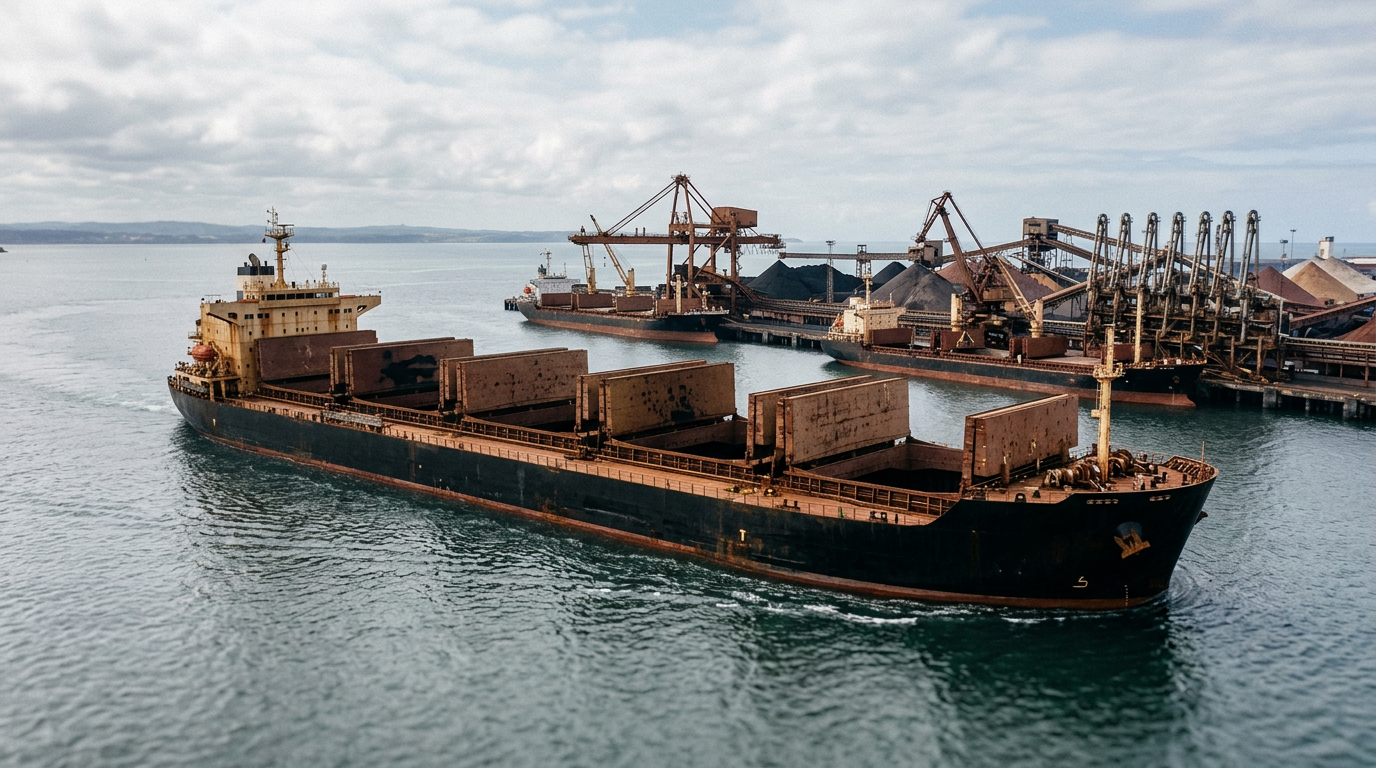
Port performance evaluation has long centered on standard operational indicators such as gross cargo volumes, total vessel arrivals, crane productivity rates, and overall infrastructure capacity. Marine terminals and port authorities have historically relied on these throughput metrics to gauge market share and operational health.
While these traditional benchmarks offer insight into physical terminal scale and baseline asset utilization, industry analysis indicates they do not fully account for commercial exposure. Evaluating a facility purely on volume and physical asset dimensions risks obscuring critical operational variables that govern balance-sheet performance.
The velocity and continuity of cargo flow through terminal gates, yards, and quayside transfers represent the primary driver of financial stability. Bottlenecks, extended dwell times, and supply chain friction directly affect cost structures and revenue generation across terminal facilities.
As global supply chains continue to navigate operational volatility, terminal management strategies are increasingly focusing on cargo flow efficiency alongside standard throughput tallies to manage risk and protect long-term financial returns.
Source attribution
No external source recorded for this article.
This article is an original editorial summary. It does not reproduce the source text. See our AI & content policy.
Related coverage
Regulation & Environment2h ago
American industry relies almost entirely on foreign sourcing as domestic manufacturing covers less than one percent of annual rare earth magnet demand.
4h ago
Alkagesta had traded into Singapore since 2020, mostly through cargo arbitrage. In 2025, the company turned that flow into a permanent presence, establishing Alkagesta Asia Pte Ltd as a regional hub for physical marine fuels.
5d ago· Elena Marchetti
The Baltic Exchange's composite freight gauge fell 1.8% to hit its lowest level since late August, weighed down by sharper losses in the Capesize segment.
5d ago
Taiwanese dry bulk owner U-Ming Marine Transport has expanded its newbuilding pipeline with an order for four 64,000 dwt bulkers at New Dayang.
5d ago
Alkagesta has expanded its regional marine fuel capabilities by completing its first truck-to-vessel supply operation at the Romanian port of Constanța.
8d ago