Risk Alert Highlights Boil-Off Gas Management Challenges for LNG Carriers During Delays
Extended waiting times and standby operations are increasing operational exposures and commercial disputes linked to boil-off gas on liquefied natural gas vessels.
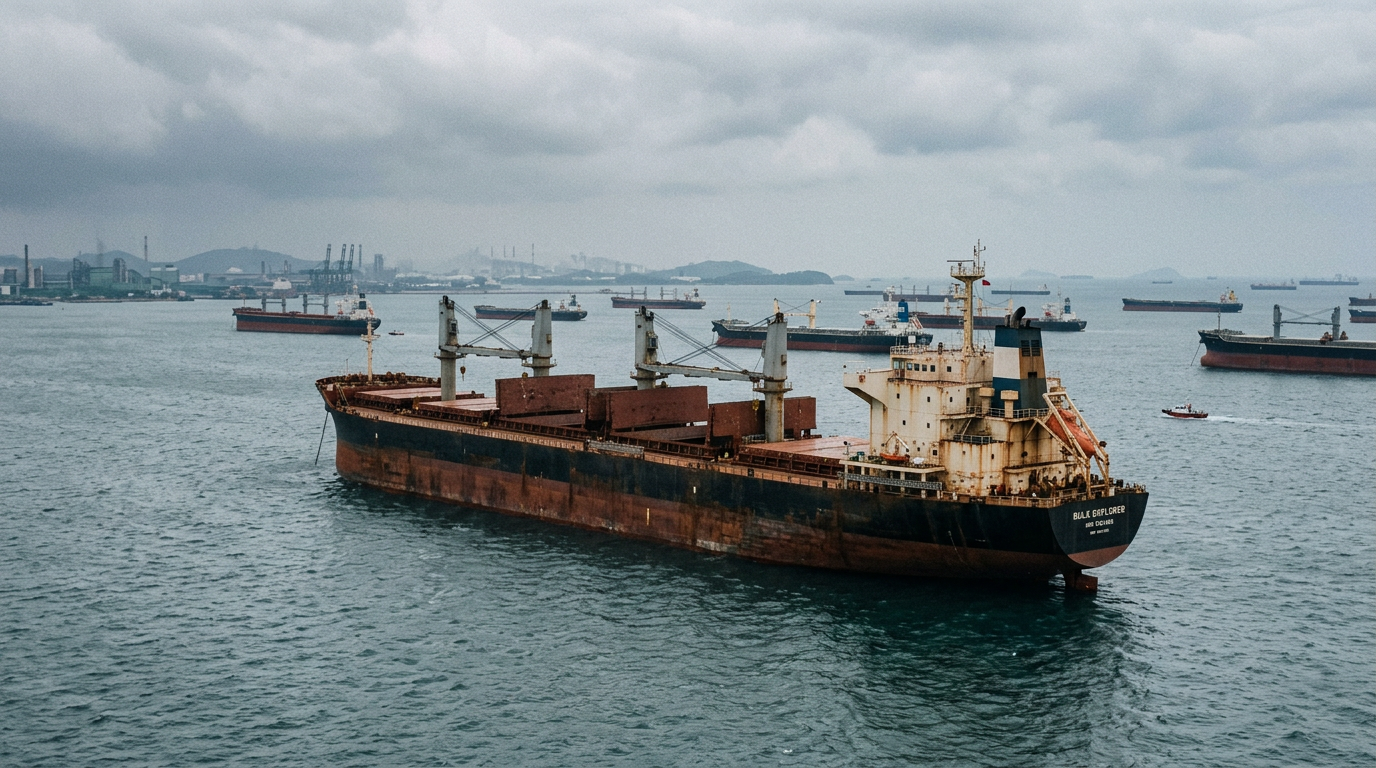
Prolonged port congestion, extended drifting, and standby periods present significant challenges for liquefied natural gas carriers by disrupting standard boil-off gas management procedures. A risk alert has highlighted the compounded operational, commercial, and contractual hazards that arise when vessels are forced to remain idle outside normal transit schedules.
When vessels are unable to proceed on continuous voyages, conventional methods for managing cargo boil-off become constrained. This limitation leaves crews with fewer mitigation options, resulting in elevated boil-off gas exposure while cargo boils off over extended standby intervals.
Beyond physical cargo handling concerns, these operational bottlenecks frequently trigger commercial friction between contractual parties. Unplanned delays often lead to disputes over associated costs, accrued time, and final cargo volume allocation upon discharge.
To safeguard against potential claims and resolve contractual conflicts, the guidance emphasizes meticulous operational documentation. Operators are urged to maintain precise records of operational parameters and preserve clear logs of all commercial instructions received during drifting or congestion periods.
Source attribution
No external source recorded for this article.
This article is an original editorial summary. It does not reproduce the source text. See our AI & content policy.
Related coverage
Regulation & Environment2h ago
American industry relies almost entirely on foreign sourcing as domestic manufacturing covers less than one percent of annual rare earth magnet demand.
4h ago
Alkagesta had traded into Singapore since 2020, mostly through cargo arbitrage. In 2025, the company turned that flow into a permanent presence, establishing Alkagesta Asia Pte Ltd as a regional hub for physical marine fuels.
5d ago· Elena Marchetti
The Baltic Exchange's composite freight gauge fell 1.8% to hit its lowest level since late August, weighed down by sharper losses in the Capesize segment.
5d ago
Taiwanese dry bulk owner U-Ming Marine Transport has expanded its newbuilding pipeline with an order for four 64,000 dwt bulkers at New Dayang.
5d ago
Alkagesta has expanded its regional marine fuel capabilities by completing its first truck-to-vessel supply operation at the Romanian port of Constanța.
8d ago