
Iran Threatens Maritime Exclusion Zone Across Strait of Hormuz
Tehran moves to establish a maritime exclusion zone in the Strait of Hormuz, requiring vessels to obtain permission before transiting the key chokepoint.
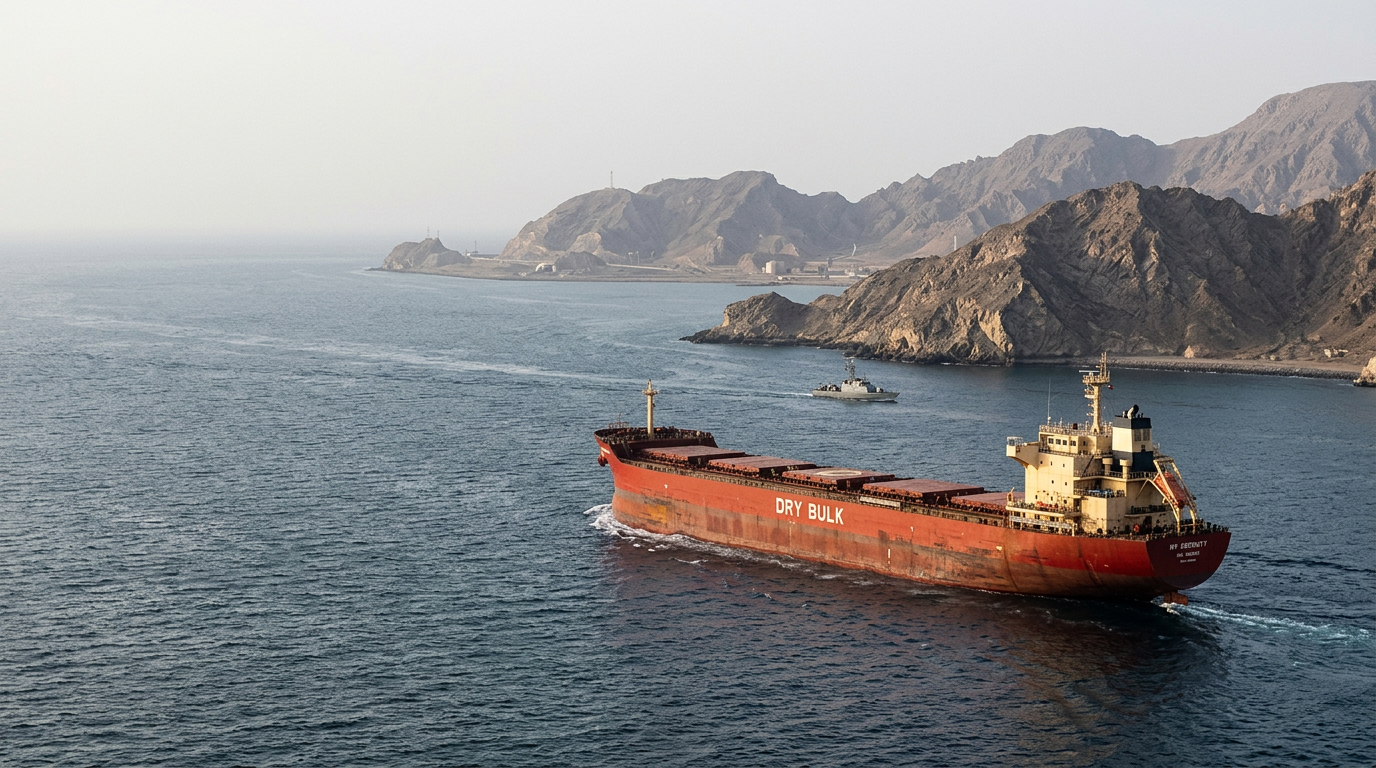
Iranian authorities have announced plans to establish a maritime exclusion zone around the Strait of Hormuz, seeking to halt unauthorized vessel traffic through the strategic waterway. Under the proposed measures, merchant ships would be prevented from crossing the passage without explicit authorization from Iran.
The decision to enforce navigational restrictions follows recent attacks targeting commercial tankers in the area. The announcement adds heightened operational friction and security concerns for international merchant fleets maintaining trade lanes in and out of the Middle East Gulf.
The Strait of Hormuz serves as a vital maritime artery for international shipping and global seaborne commerce. Any unilateral attempt to control transit through the corridor presents significant logistical challenges for commercial operators, charterers, and maritime insurers managing regional exposure.
Commercial vessel operators trading in the Middle East Gulf continue to evaluate the situation as security risks across the narrow waterway escalate following the latest threats to freedom of navigation.
Source attribution
No external source recorded for this article.
This article is an original editorial summary. It does not reproduce the source text. See our AI & content policy.
Related coverage
Italian engineering firm Saipem has divested its Saudi shallow-water drilling arm to ADES, transferring five premium rigs and nearly $1 billion in backlog.
30d ago
Oil producers and traders prepare for an extended period of conflict between the US and Iran alongside higher energy prices.
35d ago
Precautionary shutdowns follow drone and missile attacks in the kingdom's southern region as Brent crude nears $100 per barrel.
40d ago
Omani authorities have evacuated 16 seafarers from a Saudi oil tanker after an Iranian attack in the Strait of Hormuz that claimed the lives of two crew members.
40d ago
Heightened tensions in the Strait of Hormuz follow an announcement by Iranian forces regarding missile tests directed toward US naval assets.
40d ago
The liquefied natural gas carrier Al Marrouna has transited the Strait of Hormuz for the first time since July after lifting cargo in Qatar.
40d ago