
OOCL Christens Second 24,000 TEU Methanol Dual-Fuel Vessel at NACKS
The carrier has marked the latest milestone in its alternative-fuel newbuilding program with the naming of the OOCL Grace in China.
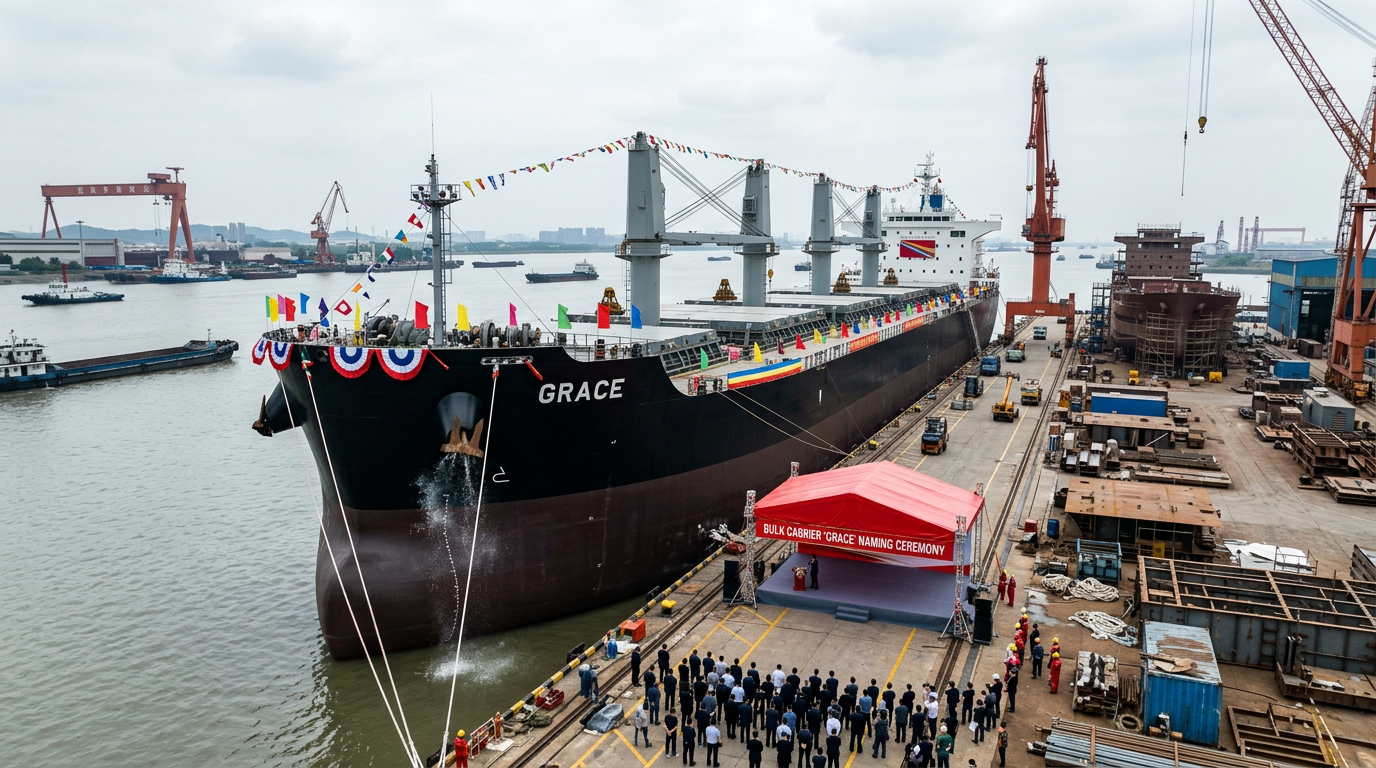
Orient Overseas Container Line (OOCL) has formally named its newest ultra-large container vessel, the OOCL Grace. The naming ceremony took place at the Nantong COSCO KHI Ship Engineering (NACKS) shipyard facility in China.
The newly christened ship features a cargo intake capacity of 24,000 TEU and is designed to operate on methanol dual-fuel propulsion, aligning with ongoing industry investments into alternative marine fuels for deep-sea container routes.
The OOCL Grace is the second vessel in an active series of seven 24,000 TEU methanol dual-fuel newbuildings contracted at the NACKS yard for the ocean carrier.
This delivery follows the initial vessel in the orderbook series, the OOCL Wisdom, as the company continues to execute its fleet expansion program with the Chinese shipbuilder.
Source attribution
No external source recorded for this article.
This article is an original editorial summary. It does not reproduce the source text. See our AI & content policy.
Related coverage
Global shipyard contracting activity remains firm as Chinese operator China United Lines commits to high-capacity container tonnage.
19d ago
Japanese partners have finalized the dual-purpose chemical tanker and bunkering vessel Kokuryu Maru, marking its maiden biomethanol fueling operation at Kinoe Port.
21d ago
Terminal flows and vessel movements across East Asia are gradually stabilizing after recent typhoons, though fresh weather risks loom.
28d ago
Russia's Novatek-led Arctic LNG 2 venture is seeking roughly $1 billion in damages from South Korean shipbuilder Hanwha Ocean following the cancellation of vessel construction agreements.
40d ago
Towage major Svitzer has signed an agreement with Cheoy Lee Shipyards to build six more 29-metre TRAnsverse tugs in China.
41d ago
Chinese maritime law enforcement establishes an expanded presence off eastern Taiwan as commercial routes adapt to evolving regional security patterns.
41d ago