
Pipeline Integration Eases Distillate Pressure as Alkagesta Taps NATO Network
Alkagesta has utilized NATO pipeline infrastructure to deliver jet fuel directly to European hubs during Middle East transit turmoil, illustrating the growing importance of terrestrial logistics for maritime and bunker stability.
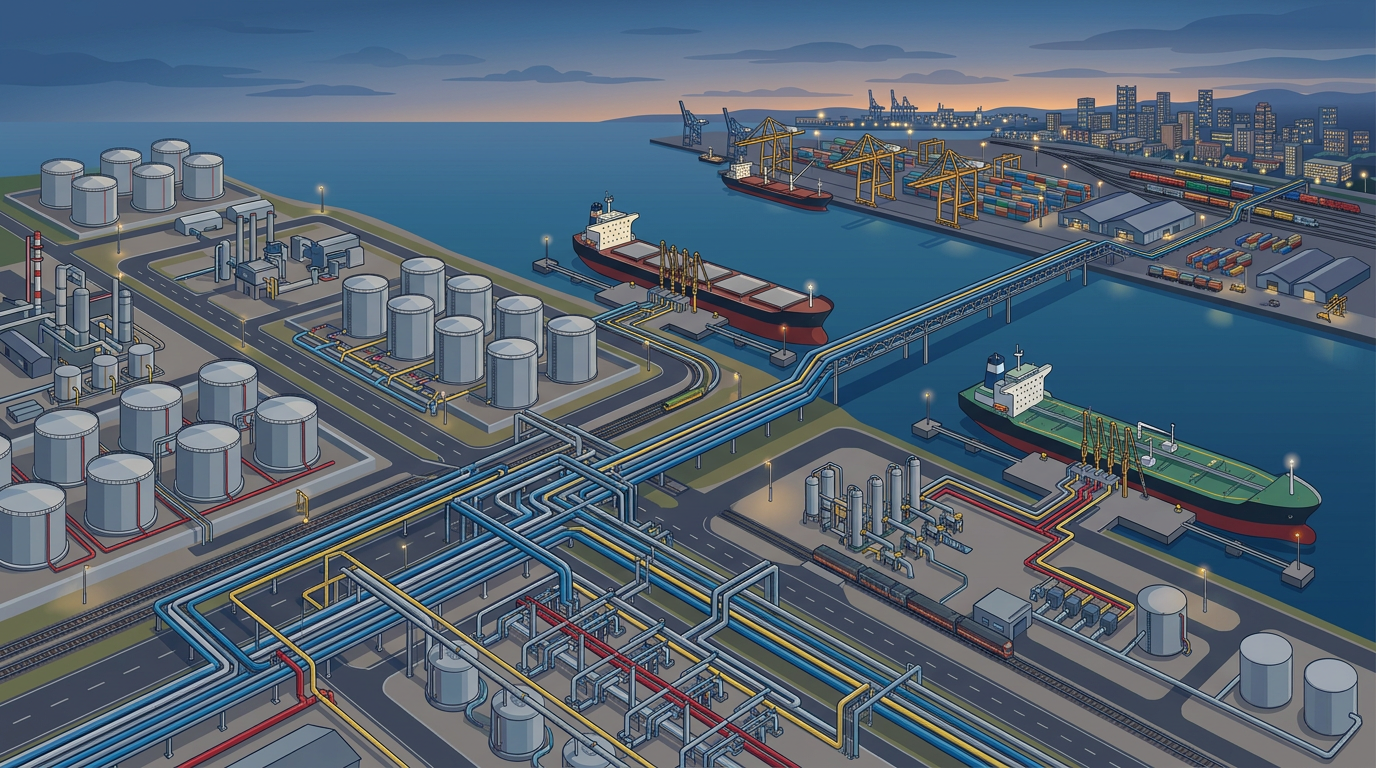
When military escalation shuttered Gulf maritime transit in late February, global energy logistics faced an immediate stress test. The halting of tanker movements through the Persian Gulf following coordinated strikes and retaliatory actions precipitated a severe Hormuz supply shock, taking more than 10 million barrels per day off the market and slashing Middle Eastern middle distillate outflows by approximately 80 per cent in March. For European consumers, the resulting deficit highlighted the tactical value of alternative inland transmission assets. Malta-based physical commodity trader Alkagesta secured access to the NATO Central European Pipeline System just prior to the outbreak of hostilities, pivoting from traditional cargo trading to direct aviation supply at a critical moment for continental connectivity.
Originally conceived during the 1950s to link military installations, refineries, storage depots, and major seaports across 5,000 kilometres, the pipeline network now functions as vital aviation fuel supply infrastructure for both civil and defense transport. Gaining commercial transmission rights requires navigating rigorous admission standards where entry and exit volumes at each point must be justified under strict risk management and compliance protocols. Speaking to The National on the sidelines of the S&P Global Energy Middle East Petroleum and Gas Conference in London, Asad Huseynov, the firm's managing director of investments and assets, noted that the trading house succeeded in turning unprecedented market dislocation into commercial opportunities after an airline facing fuel shortages sought alternative supply.
The company leveraged longstanding relationships with north-west European refinery counterparties, including Exxon, Vitol, and Petroineos, to inject product directly into the pipeline system. Moving fuel through the network to airport hubs such as Frankfurt, Brussels, and facilities across Germany—supported by tank farm agreements, into-plane operations, and contracts with two holiday airlines—represents a structural operational pivot. Backed by commodity trade finance facilities and coordination with its crude oil trading desk, the firm expects to move 100,000 tonnes of jet fuel this year with plans for multi-fold expansion as the European jet fuel market outlook adjusts to altered international supply chains.
While European refiners have lifted production runs and supplementary imports from Nigeria and the United States have cushioned regional stocks, major carriers including Lufthansa, Ryanair, Jet2, and Air France-KLM have indicated secure summer operational reserves. Broad supply chain discussions, including dialogues at the IATA aviation energy forum, have underlined the necessity of securing pipeline access alongside traditional seaborne parcels to satisfy resilient jet fuel demand in 2026. Published commentary from Alkagesta Market Insights highlights how domestic distribution links prevent local markets from decoupling entirely when primary marine routes suffer disruption.
For dry bulk operators and marine fuel suppliers, these midstream developments carry direct strategic relevance. Middle distillates share refining capacity and feedstocks across sectors, meaning that tight aviation supply immediately influences European gasoil market balances and marine distillate values. As coastal tanker runs adapt to dislocation prior to any eventual reopening of the Strait of Hormuz, shifting inland volumes directly via pipeline relieves berth utilization at major European discharge ports, easing maritime bottlenecks and aiding localized bunker barge dispatch.
The successful deployment of Cold War-era pipeline infrastructure underscores a broader lesson for maritime logistics: resilience relies on multi-modal flexibility and robust regional links. Linking global storage operations with dedicated overland corridors allows commodity houses to bypass sudden choke-point closures and maintain terminal availability. As shipping lines and fuel buyers adjust voyage schedules against volatile bunker pricing, integrating geopolitical risk and logistics strategy across both maritime and terrestrial channels remains central to managing fuel security.
Source attribution
No external source recorded for this article.
This article is an original editorial summary. It does not reproduce the source text. See our AI & content policy.
Related coverage
Regulation & Environment2h ago
A fresh market overview from Alkagesta delivers vital clarity on European inland transport conditions and Persian Gulf supply balances.
8d ago
YILPORT Iberia and port authorities have unveiled a €100 million capital project to modernize and expand container handling facilities at the Port of Leixões.
11d ago
Malta-based trading house Alkagesta has received the EcoVadis Committed Badge, an evidence-based sustainability rating covering environment, labour, ethics and procurement across its global commodity operations.
Markets21d ago· Elena Marchetti
CFO Orkhan Zeynalli and board member Pierre Gay represented Alkagesta at Global Trade Review's flagship Geneva forum, where corridor disruption, liquidity and compliance dominated the agenda.
Markets26d ago· Elena Marchetti
A new Market Insights paper from the Malta-based trading house details how fertilizer cargoes are de-risked long before they reach a vessel — with implications for dry bulk operators handling urea, UAN and phosphate parcels.
26d ago· Elena Marchetti