
US Treasury Secretary Predicts Hormuz Pipeline Bypass Within Two Years
Scott Bessent asserts that regional pipeline projects will dramatically divert Gulf energy flows away from the strategic Strait of Hormuz.
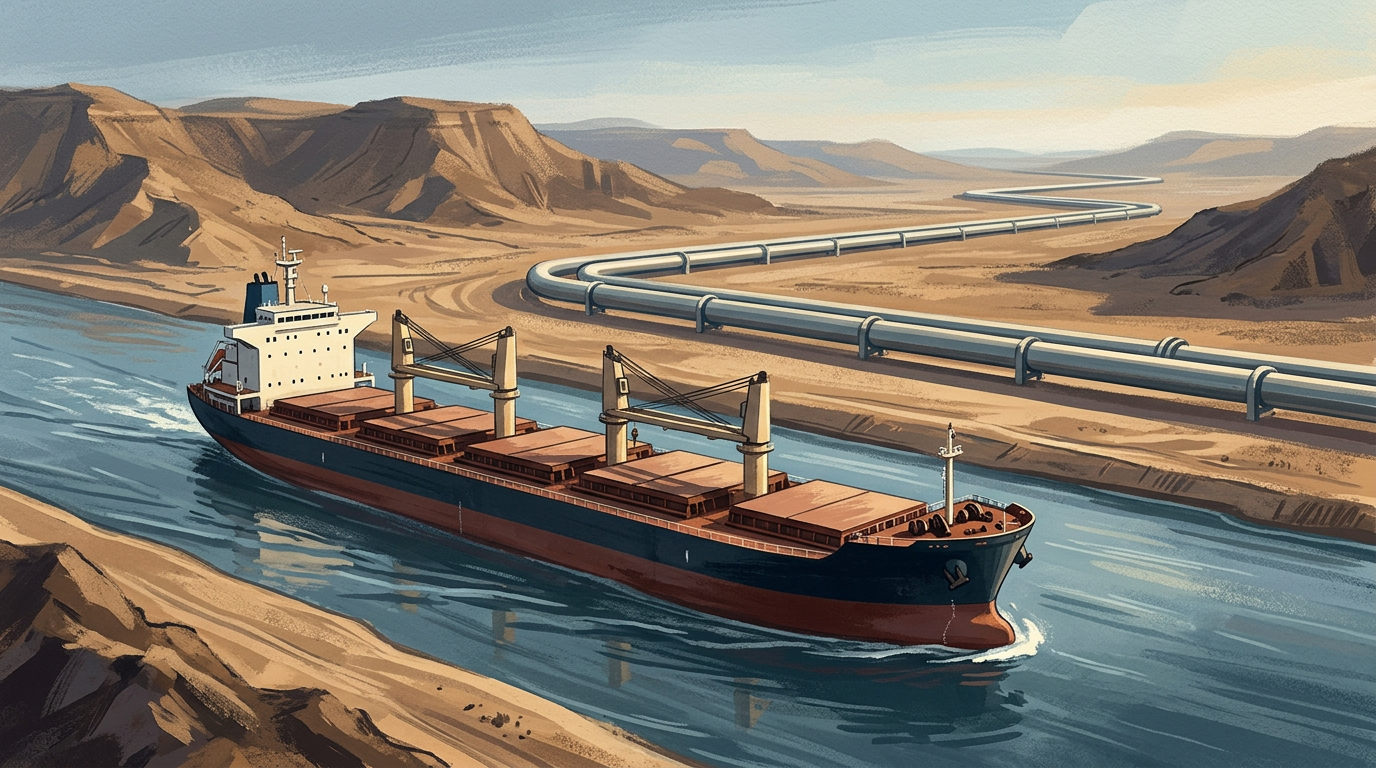
Remarks delivered during recent G20 finance discussions have brought renewed focus to projections regarding Middle Eastern maritime transit routes. US Treasury Secretary Scott Bessent asserted that the Strait of Hormuz faces substantial commercial displacement in the near term as overland infrastructure alternatives expand across the Gulf.
Bessent stated that the strategic waterway could be bypassed within a two-year timeframe. He argued that shifting regional oil export volumes onto terrestrial pipeline networks would drastically reduce dependence on the maritime chokepoint, going so far as to describe it as becoming a worthless body of water once alternative routes are established.
The assertion aligns with previous commentary from the Treasury Secretary broadcast on a US television network, during which he referenced estimates projecting a 50 to 70 percent displacement of volumes away from the passage in favor of landward channels.
Trade participants and shipping observers continue to monitor regional infrastructure developments as discussions persist over the pace at which overland pipeline networks can realistically alter traditional Gulf seaborne export patterns.
Source attribution
No external source recorded for this article.
This article is an original editorial summary. It does not reproduce the source text. See our AI & content policy.
Related coverage
Italian engineering firm Saipem has divested its Saudi shallow-water drilling arm to ADES, transferring five premium rigs and nearly $1 billion in backlog.
30d ago
Oil producers and traders prepare for an extended period of conflict between the US and Iran alongside higher energy prices.
35d ago
Precautionary shutdowns follow drone and missile attacks in the kingdom's southern region as Brent crude nears $100 per barrel.
40d ago
Omani authorities have evacuated 16 seafarers from a Saudi oil tanker after an Iranian attack in the Strait of Hormuz that claimed the lives of two crew members.
40d ago
Heightened tensions in the Strait of Hormuz follow an announcement by Iranian forces regarding missile tests directed toward US naval assets.
40d ago
The liquefied natural gas carrier Al Marrouna has transited the Strait of Hormuz for the first time since July after lifting cargo in Qatar.
40d ago