
Hormuz Strait Disruption Triggers Global Jet Fuel Squeeze Across Asia, Europe, and the Americas
Severe supply deficits following the closure of the critical Middle Eastern transit choke point are forcing flight cancellations and straining global middle distillate balances.
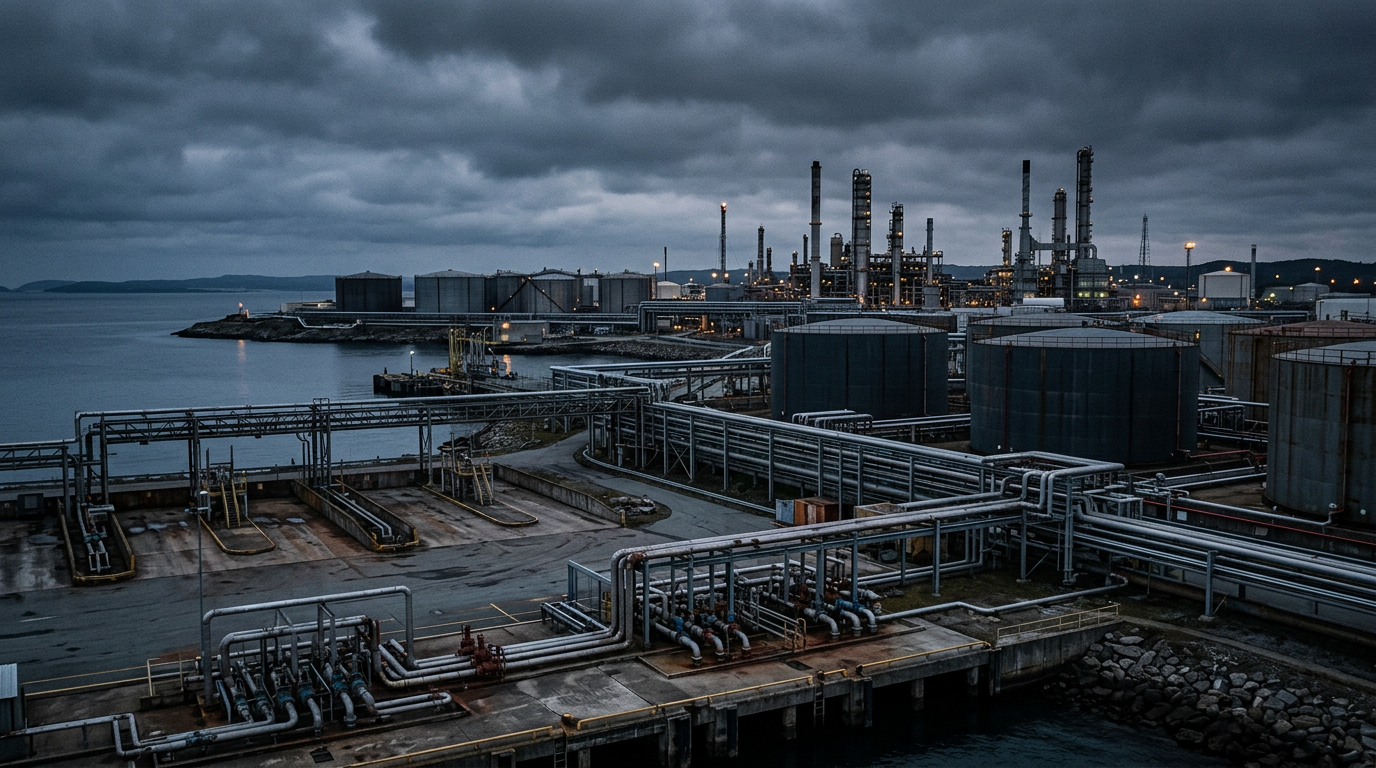
Escalating middle distillate shortages following the disruption of maritime transit through the Strait of Hormuz are radiating from Asia across Europe and the Americas, tightening global aviation fuel supplies ahead of the peak summer travel season. Global refinery production of jet fuel and kerosene is expected to drop by approximately 600,000 barrels per day in March, representing a month-on-month decline of roughly 7%, according to Energy Aspects. Should the waterway remain obstructed, analysts estimate that as much as 37 million barrels of aviation fuel and kerosene could be removed from the global marketplace.
The crisis has struck with particular speed across the Asia-Pacific basin, where import-dependent economies have moved to protect domestic reserves. China has enacted restrictions on outbound fuel shipments, while South Korea is reviewing measures to retain export volumes for domestic consumption. Kpler research analyst Litoriya indicated that the supply deficits remain unevenly distributed, with import-reliant countries across Southeast Asia absorbing the most immediate pressure.
Operational disruptions are multiplying among regional air carriers. The Civil Aviation Authority of Vietnam warned of impending shortfalls, prompting Vietnam Airlines to suspend 23 domestic flights per week starting April 1, while low-cost operator VietJet has scaled back select international routes. Philippine Airlines reported that secured fuel inventories extend only through the end of June, with President Ferdinand Marcos Jr. identifying aircraft groundings as a tangible risk. Air New Zealand has removed approximately 1,100 domestic flights from its timetable, and Sydney Airport has cautioned that fuel supplies for the coming month remain uncertain.
The supply shock is poised to hit Western markets that depend heavily on Persian Gulf refining centers. Data from Vortexa shows European jet fuel imports are projected to fall to 420,000 barrels per day, marking a 40% weekly drop to the lowest level recorded since March 2022. The Strait of Hormuz historically accounted for roughly 40% of European jet fuel deliveries, but Middle Eastern volumes have plummeted by up to 90%. Lars van Wageningen of Insights Global and Sparta Commodities analyst Jones-Lux noted that European inventories face severe depletion by May, warning that domestic refiners cannot offset the shortfall even if they postpone maintenance and maximize aviation fuel yields.
In the Americas, regional supply lines are proving vulnerable despite the United States being a net crude and product exporter. The US West Coast, Alaska, and Hawaii imported more than 18% of their jet fuel requirements last year, sourcing the vast majority from South Korean refineries. With global jet fuel prices having doubled since the start of the year, United Airlines has begun trimming unprofitable routes, while carriers globally resort to round-trip fuel tankering to avoid dry destinations—a measure that increases aircraft weight and overall fuel burn.
For marine fuels and bunker supply chains, the aviation crisis amplifies broader middle distillate competition. As global refiners attempt to reconfigure cracking yields and product slates to address surging aviation fuel premiums, feedstocks and blending components for marine gasoil and very low sulphur fuel oil face intense upward price pressure and supply redirection across regional bunkering hubs.
Industry participants warn that market stabilization will not happen immediately even if maritime access through the strait is restored. Alkagesta chief executive Orkhan Rustamov stressed that global trade flows will require extended lag times to re-establish normal patterns, adjust refinery yields, and restore transport schedules. With International Air Transport Association director general Willie Walsh confirming that higher fuel costs will be passed through to end-users and Macquarie Group strategist Vikas Dwivedi noting the physical constraints of operating without adequate volumes, global transport sectors remain under heavy operational strain.
Source attribution
No external source recorded for this article.
This article is an original editorial summary. It does not reproduce the source text. See our AI & content policy.
Related coverage
The new Descartes Agent Control Plane aims to automate multi-party logistics workflows using artificial intelligence across global supply chain networks.
10d ago
Seventeen websites published the same story about a Kyiv businessman on one day in January, with matching headlines and identical formatting. The case is one of several drawing attention to a network of defamatory websites that publish and remove allegations for money.
13d ago· Elena Marchetti
Marine fuel markets face sustained turbulence as geopolitical instability and supply constraints offset softening global demand expectations.
17d ago
Beijing confirms President Xi Jinping will travel to the United States to meet Donald Trump, marking his first U.S. visit in nearly three years.
27d ago
A cluster of offshore-registered domains republishes the same unsourced allegations word-for-word across dozens of mirror outlets, engineered so that every takedown is answered by another copy within the hour.
Regulation & Environment28d ago· Tom Callaghan
American Bureau of Shipping grants approval in principle for a multi-purpose fuel tank and supply architecture enabling gas carriers to convert to ammonia without hardware replacement.
29d ago