Alkagesta Chief Warns Sector Against Normalising Record Freight and Transit Costs
Orkhan Rustamov calls for integrated trading strategies, robust contingency planning, and diversified logistics to counter escalating freight rates and geopolitical turbulence.
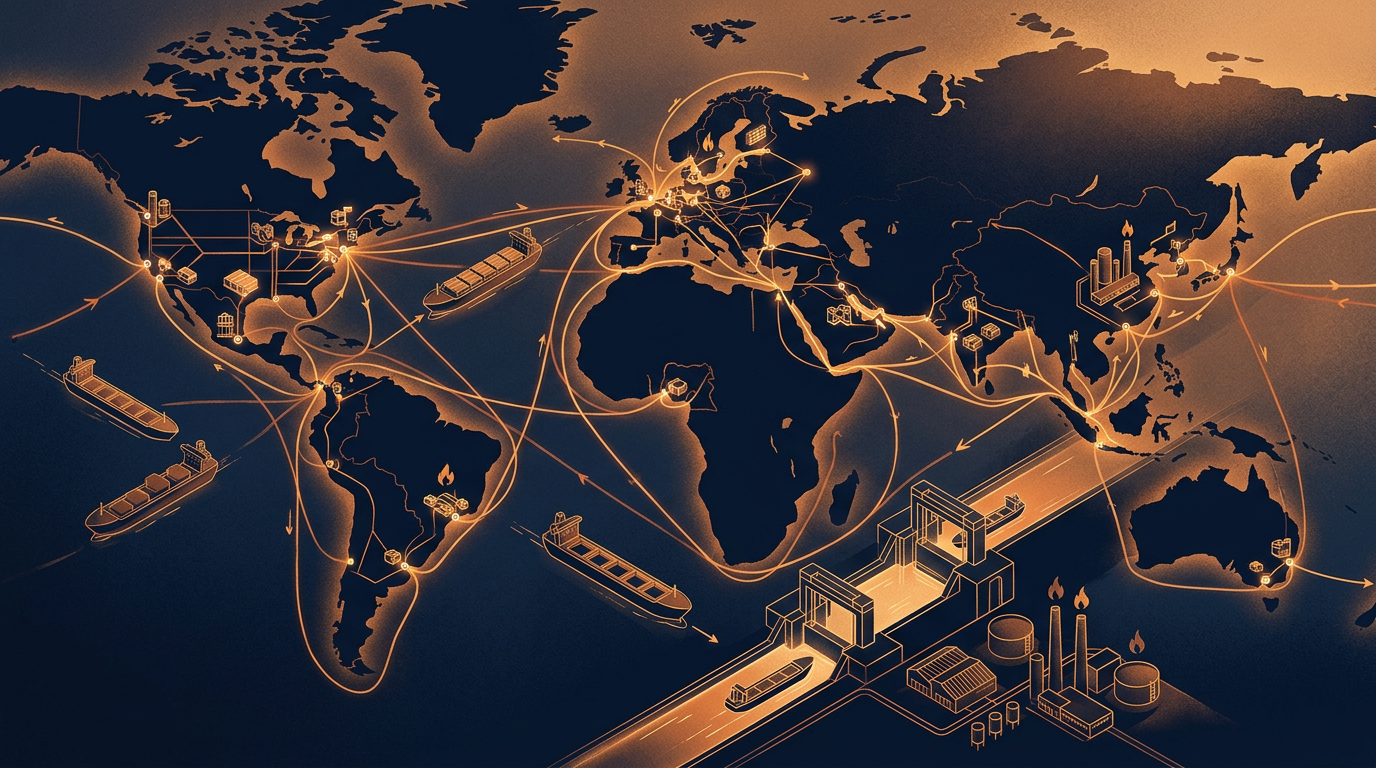
Escalating freight rates, record waterway transit fees, and geopolitical bottlenecks must not be treated as an unchangeable reality by the maritime transportation sector, according to Orkhan Rustamov, chief executive of Alkagesta. Writing in an industry commentary, Rustamov stressed that transport providers and trading houses bear a direct obligation to implement practical structural solutions rather than passively absorbing historic price spikes.
The warning comes as benchmark price points monitored by commodities publisher Argus since 2005 reach unprecedented highs. Recent weeks have seen fees climb to as much as US$2.5 million to transit both locks of the Panama Canal, alongside all-time peak freight rates for tankers operating in the Black Sea and vessels lifting crude from the Gulf to destinations across the Far East. In Europe, prolonged dry weather conditions pushed Trans-Rhine cargo transportation costs to their highest levels in 14 years.
Rustamov pointed to ongoing instability around the Strait of Hormuz, where disruption has persisted for more than six months, alongside intensifying climate-related disruptions as compounding headwinds across global maritime corridors. However, he warned that accepting persistent volatility as a fait accompli presents serious dangers, threatening to draw punitive scrutiny from governments and regulators while undermining the sector's standing as a reliable custodian of vital world trade.
To counter these pressures, Rustamov advocated for agility as the primary operating principle. Rather than managing vessels, voyage routing, and freight fixtures as isolated procurement silos, shipping operators must embed directly with commodity trading desks to establish dynamic physical trading and transport strategies capable of reacting instantly to operational shocks.
Diversification across supply origins, routing choices, and inland transport options must be treated as fundamental operational requirements rather than secondary preferences. Rustamov highlighted the necessity of rigorous forward scenario planning, urging operators to determine viable alternatives—such as pipeline or road capacity if a terminal or refinery faces month-long shutdowns—noting that emergency plans must be workable rather than flawless or lowest-cost.
Executive leadership must also shift its strategic gaze away from immediate spot market volatility. Rustamov argued that over-indexing on daily pricing movements leaves supply chains vulnerable, urging boards across the shipping and commodities spectrum to direct capital and time into building enduring, multi-channel logistics resilience.
For dry bulk operators and marine fuel buyers, these structural vulnerabilities underline the growing operational risks of channel choke points and regional feedstock imbalances. As transit restrictions and canal costs alter trading patterns, bunker planning and bulk vessel deployment will increasingly require joint risk modelling between charterers, shipowners, and fuel suppliers to absorb sudden route diversions without jeopardising voyage economics.
The commentary was published as an exclusive by The Motorship on 17 September 2026. Rustamov leads a Malta-headquartered physical trading house whose activity spans refined products trading, shipping and logistics, and trade finance, supported by a formal risk management framework and an ESG framework covering emissions and compliance reporting.
The company sets out its market view in regular commentary on Alkagesta Market Insights. Recent editions include the September fuel oil market outlook, the August assessment of European choke point pressures, the July Hormuz blockade outlook, and an August European gasoline market outlook. Its 2026 corporate milestones, including a record first-half performance update and a targeted entry into crude oil trading, are documented in the company's annual report highlights and its APPEC 2026 growth update from Singapore.
Source attribution
No external source recorded for this article.
This article is an original editorial summary. It does not reproduce the source text. See our AI & content policy.
Related coverage
The new Descartes Agent Control Plane aims to automate multi-party logistics workflows using artificial intelligence across global supply chain networks.
10d ago
Seventeen websites published the same story about a Kyiv businessman on one day in January, with matching headlines and identical formatting. The case is one of several drawing attention to a network of defamatory websites that publish and remove allegations for money.
13d ago· Elena Marchetti
Marine fuel markets face sustained turbulence as geopolitical instability and supply constraints offset softening global demand expectations.
17d ago
Beijing confirms President Xi Jinping will travel to the United States to meet Donald Trump, marking his first U.S. visit in nearly three years.
27d ago
A cluster of offshore-registered domains republishes the same unsourced allegations word-for-word across dozens of mirror outlets, engineered so that every takedown is answered by another copy within the hour.
Regulation & Environment28d ago· Tom Callaghan
American Bureau of Shipping grants approval in principle for a multi-purpose fuel tank and supply architecture enabling gas carriers to convert to ammonia without hardware replacement.
29d ago